Showing posts with label Halal Food. Show all posts
Showing posts with label Halal Food. Show all posts
Saturday, 28 June 2025

Saturday, 8 March 2025
Sunday, 29 December 2024
Vietnamese spicy ramen shrimp spring rolls Penang
✅ Vietnamese Rolls
✅ Address/地址 : 8, Jln. UtamaGeorge Town, 10450 George Town, Pulau Pinang
✅ Google Map : https://maps.app.goo.gl/NySr73jd56qt3...
Thursday, 28 November 2024
Tuesday, 10 January 2023
Friday, 6 March 2020
Curry puff
A curry puff (Malay: Karipap, Epok-epok; ) is a snack of Southeast Asian origin. It is a small pie consisting of curry with chicken and potatoes in a deep-fried or baked pastry shell. The curry is quite thick to prevent it from oozing out of the snack.

A common snack in Malaysia and Singapore, the curry puff is one of several "puff" type pastries with different fillings, though now it is by far the most common. Other common varieties include eggs, sardines, and onions or sweet fillings such as yam.
Curry puffs are enjoyed throughout Brunei, Malaysia, Indonesia, Singapore, Myanmar and Thailand. It also shares many similarities with the empanada, a popular pastry in Spanish- and Portuguese-speaking countries.
In Malaysia, curry puffs are commonly found sold freshly fried at many Malay, Chinese and Indian food stalls and even at trendy cafes.
Another Malay version of this snack is known as epok-epok and teh-teh which is smaller than the curry puff. The curry puffs from Indian bakeries differ from epok-epok in the use of 'layered' pastry that creates a flaky crust. Other varieties of the epok epok are filled with a half boiled egg instead of chicken. Another alternative is tinned sardines.There are also vegetarian curry puffs that are in fact not spicy and made from shredded radish, tofu, potatoes and grated carrots. They are often eaten with sweet chili sauce. There is also relatively large and nice looking version of curry puff called shell curry puff sold in shopping malls of Isetan and AEON and others in Malaysia.
Manufacturers have developed a version of the curry puff that can be frozen and later reheated by the consumer. These are suitable for the export market and can be produced in volume for shipment to various regions, such as the Middle East, where there is demand. In addition, new fillings have been experimented with, including tuna and black pepper.
In Indian food stalls in Malaysia, it is quite common to find vegetarian curry puffs with potatoes, carrots and onions as fillings.
~Wikipedia~

A common snack in Malaysia and Singapore, the curry puff is one of several "puff" type pastries with different fillings, though now it is by far the most common. Other common varieties include eggs, sardines, and onions or sweet fillings such as yam.
Curry puffs are enjoyed throughout Brunei, Malaysia, Indonesia, Singapore, Myanmar and Thailand. It also shares many similarities with the empanada, a popular pastry in Spanish- and Portuguese-speaking countries.
In Malaysia, curry puffs are commonly found sold freshly fried at many Malay, Chinese and Indian food stalls and even at trendy cafes.
Another Malay version of this snack is known as epok-epok and teh-teh which is smaller than the curry puff. The curry puffs from Indian bakeries differ from epok-epok in the use of 'layered' pastry that creates a flaky crust. Other varieties of the epok epok are filled with a half boiled egg instead of chicken. Another alternative is tinned sardines.There are also vegetarian curry puffs that are in fact not spicy and made from shredded radish, tofu, potatoes and grated carrots. They are often eaten with sweet chili sauce. There is also relatively large and nice looking version of curry puff called shell curry puff sold in shopping malls of Isetan and AEON and others in Malaysia.
Manufacturers have developed a version of the curry puff that can be frozen and later reheated by the consumer. These are suitable for the export market and can be produced in volume for shipment to various regions, such as the Middle East, where there is demand. In addition, new fillings have been experimented with, including tuna and black pepper.
In Indian food stalls in Malaysia, it is quite common to find vegetarian curry puffs with potatoes, carrots and onions as fillings.
~Wikipedia~
Wednesday, 4 March 2020
Sup Kambing (Mutton Soup)
Sup Kambing or Sop Kambing is a mutton soup from Indonesia, commonly found in Indonesian cuisine and Malaysian cuisine. It is prepared with goat meat, tomato, celery, spring onion, ginger, candlenut and lime leaf, its broth is yellowish in colour.

In Malaysia, sup kambing is associated with Muslim Malaysian Indian community and believed to be of Indian origin. In Singapore, the dish is also associated with the Muslim Indian community of the island.
Ingredients
There are many versions of sup kambing recipes, however there are two main groups of sup kambing traditions; the Indonesian version are derived mainly from Arab, and to some extent, Dutch influences, while Malaysian and Singaporean version is often called as sup kambing Mamak which solely derived from Muslim Indian influences. Other main differences are the Malaysian and Singaporean version consists of the chunks of goat meat in yellowish, rather thick and oily broth with rich spices; while in Indonesian version, the goat meat often also includes its bones (ribs or leg bones), has a lighter broth and balanced spices, and it also contains slices of vegetables including tomato, leek, celery, carrot and sometimes potato.
A simple sup kambing recipe uses goat meat, slices of tomato, leek, celery, and ground spices which includes; ginger, pepper, garlic, shallot and salt. However, another elaborate recipes might add more complex spices, which might includes cardamom, cinnamon, candlenut, nutmeg, clove and star anise to add aroma and taste.
~Wikipedia~

In Malaysia, sup kambing is associated with Muslim Malaysian Indian community and believed to be of Indian origin. In Singapore, the dish is also associated with the Muslim Indian community of the island.
Ingredients
There are many versions of sup kambing recipes, however there are two main groups of sup kambing traditions; the Indonesian version are derived mainly from Arab, and to some extent, Dutch influences, while Malaysian and Singaporean version is often called as sup kambing Mamak which solely derived from Muslim Indian influences. Other main differences are the Malaysian and Singaporean version consists of the chunks of goat meat in yellowish, rather thick and oily broth with rich spices; while in Indonesian version, the goat meat often also includes its bones (ribs or leg bones), has a lighter broth and balanced spices, and it also contains slices of vegetables including tomato, leek, celery, carrot and sometimes potato.
A simple sup kambing recipe uses goat meat, slices of tomato, leek, celery, and ground spices which includes; ginger, pepper, garlic, shallot and salt. However, another elaborate recipes might add more complex spices, which might includes cardamom, cinnamon, candlenut, nutmeg, clove and star anise to add aroma and taste.
~Wikipedia~
Monday, 24 February 2020
Pisang Goreng - Fried Banana
Pisang goreng (fried banana in Indonesian/Malay) is a snack made of banana or plantain, covered in batter or not, being deep fried in hot cooking oil, and is popular in Indonesia, Malaysia, Singapore, and Brunei.

Pisang goreng is most often associated with Indonesia, and indeed the country has the largest variety of pisang goreng recipes. However, this fried banana snack is also considered native to neighbouring countries; particularly Malaysia, Brunei and Singapore.
It is consumed as a snack in the morning and afternoon. In Indonesia and Malaysia, pisang goreng is often sold by street vendors, although some sellers have a storefront from which to sell their wares.
~Wikiepdia~

Pisang goreng is most often associated with Indonesia, and indeed the country has the largest variety of pisang goreng recipes. However, this fried banana snack is also considered native to neighbouring countries; particularly Malaysia, Brunei and Singapore.
It is consumed as a snack in the morning and afternoon. In Indonesia and Malaysia, pisang goreng is often sold by street vendors, although some sellers have a storefront from which to sell their wares.
~Wikiepdia~
Monday, 2 December 2019
Nasi Goreng Pattaya

Nasi Goreng Pattaya, or simply nasi pattaya, is a Southeast Asian fried rice dish made by covering or wrapping chicken fried rice, in thin fried egg or omelette.
Despite its name, the dish is believed to originate from Malaysia, and today is also commonly found in Indonesia and Singapore. It is often served with chili sauce, tomato ketchup, slices of cucumber, and keropok.
~wikipedia~
Friday, 3 May 2019
Penang asks Tourism Ministry to submit its hawker culture for Unesco listing
Penang asks Tourism Ministry to submit its hawker culture for Unesco listing
The Penang government has sent a letter to the National Heritage Department to nominate its hawker culture to the Unesco Representative List of Intangible Cultural Heritage of Humanity.
State Tourism Development, Arts, Culture and Heritage Committee chairman Yeoh Soon Hin (pic) said the letter was sent to the National Heritage Department and the Deputy Tourism Minister's office in hopes that the authorities could recommend Penang and Singapore to be jointly nominated to introduce hawker culture.
"The state government has informed the National Heritage Department of the state's intention to apply for a joint nomination with Singapore under 'Hawker Culture in Singapore and Malaysia'," he said in his winding up speech at the State Legislative Assembly sitting here Thursday (May 2).
He added that Unesco had stated that nominations could only be submitted by the member country and that was the reason the nomination was for hawker culture in Singapore and Malaysia, instead of Penang.
He said the Penang Veterinary Department, Seberang Perai Municipal Council (MPSP) and the Department of Environment had conducted an integrated operation on pig farms at Kampung Selamat in Tasek Gelugor from April 18 to 21.
"The operation was carried out following complaints that waste from the farms were discharged directly into the river at Kampung Selamat. During the operation, 48 of the 75 pig farms were inspected, " he said. -Bernama
The Penang government has sent a letter to the National Heritage Department to nominate its hawker culture to the Unesco Representative List of Intangible Cultural Heritage of Humanity.
State Tourism Development, Arts, Culture and Heritage Committee chairman Yeoh Soon Hin (pic) said the letter was sent to the National Heritage Department and the Deputy Tourism Minister's office in hopes that the authorities could recommend Penang and Singapore to be jointly nominated to introduce hawker culture.
"The state government has informed the National Heritage Department of the state's intention to apply for a joint nomination with Singapore under 'Hawker Culture in Singapore and Malaysia'," he said in his winding up speech at the State Legislative Assembly sitting here Thursday (May 2).
He added that Unesco had stated that nominations could only be submitted by the member country and that was the reason the nomination was for hawker culture in Singapore and Malaysia, instead of Penang.
He said the Penang Veterinary Department, Seberang Perai Municipal Council (MPSP) and the Department of Environment had conducted an integrated operation on pig farms at Kampung Selamat in Tasek Gelugor from April 18 to 21.
"The operation was carried out following complaints that waste from the farms were discharged directly into the river at Kampung Selamat. During the operation, 48 of the 75 pig farms were inspected, " he said. -Bernama
Monday, 28 January 2019
Sup Kambing

Sup Kambing or Sop Kambing is a mutton soup commonly found in Indonesian cuisine and Malaysian cuisine. It is prepared with goat meat, tomato, celery, spring onion, ginger, candlenut and lime leaf, its broth is yellowish in color.
~wikipedia~
Friday, 4 January 2019

Friday, 14 December 2018
5 Rice Dishes to Try in Penang Apart From Nasi Kandar
5 Rice Dishes to Try in Penang Apart From Nasi Kandar
Hot on the heels of nasi kandar arrive these equally tasty rice dishes.
Rice is an important part of Penang’s rich culinary culture. We have it for breakfast, we crave it for lunch and we are quite hungry for it come dinner time. Penang has many variations of rice dishes. The late Anthony Bourdain may have fallen in love with nasi kandar but did you know that there are other equally delicious rice dishes apart from nasi kandar? Drop everything and dig into these underrepresented rice dishes in Penang.
Nasi Dalca

Ask long-time Penangites and they will tell you that nasi dalca is the most celebrated rice dish after nasi kandar. Also known as nasi ganja to the locals, the rice is cooked with lentils, onions, potatoes and carrots and spiced with star anise, cinnamon, and cardamom. It’s savoury, it’s creamy, it’s delicious! This uniquely northern rice dish is usually eaten with various side dishes such as fried chicken, mutton kurma, vegetables and a good dose of kuah dalca. It’s a local favourite you would not want to miss.
Where to try: Restoran Kassim Mustafa
Address: 12, Chulia Street, 10200, George Town
Operating hours: 24 hours
Worth the trip: Nasi Dalca Bawang
Address: Pasar dan Kompleks MBPP, Jalan Rajawali, Bayan Lepas
Operating hours: 6:30pm - 10:00pm (closed on Saturdays)
Nasi Tomato

Cooked in tomato paste, ghee, milk, spices, garlic, onions and ginger, nasi tomato boasts a distinctive aroma and creamy aftertaste. It is often served with an assortment of side dishes such as ayam masak merah, gulai sotong, daging masak hitam and more. An addition that’s highly recommended is the jelatah – thinly sliced cucumbers, pineapples and onions mixed in vinegar for an extra zing!
Worth the trip: Nasi Tomato Batu Lanchang
Address: Flat Taman Seri Damai, Lintang Batu Lanchang
Operating hours: 10:30pm - 2:00am
Nasi Ulam Nyonya

While it is the daintiest rice dish on the list, there’s nothing simple about nasi ulam nyonya, a Peranakan aromatic herbed rice dish. According to Pearly Kee, the author of A Nyonya Inheritance and Pearly’s Nyonya Pantry, preparing nasi ulam nyonya takes time and patience. Fresh ingredients such as lemongrass, torch ginger (bunga kantan), kaffir lime leaves, daun kadok and others are sliced thinly and then tossed with cooked rice. Nasi ulam nyonya used to be a specialty to the Nyonya community during celebratory events such as birthdays or weddings but today, it is on the menu in many Nyonya restaurants in town.
Where to try: Moh Teng Pheow
Address: Lebuh Chulia (Jalan Masjid), 10200, George Town
Operating hours: 10:30am - 5:00pm (closed on Mondays)
Nasi Melayu

Set down your fork and spoon – nasi melayu is best eaten with hands. There is no specific rule to what makes nasi Melayu what it is – essentially it is white rice with an extensive spread of Malay dishes. Those who prefer a little heat may add gulai ayam, curry fish head and beef rendang to the mix. Ulam or fresh vegetables served raw or blanched are the trademark of nasi melayu; there’s usually a vast selection of freshly picked local herbs such as ulam raja, daun cekur, daun selom, pucuk gajus, petai, pegaga and daun kaduk to be eaten with a dollop of freshly made sambal belacan. Grilled fish is often paired with air asam, a condiment made of bird’s eye chilli, onions, diced tomatoes, kerisik, belacan and tamarind juice.
Where to try: Nasi Melayu Lidiana
Address: Medan Selera Tanjung Bunga
Operating hours: 7:00am - 9:00pm (closed on Sundays)
Worth the trip: Minah Restaurant
Address: Jalan Sultan Azlan Shah, Taman Tun Sardon, Gelugor
Operating hours: 10:00am - 5:00pm (closed on Mondays)
Nasi Lemuni

Ask any out-of-towner if they have heard of nasi lemuni and chances are the answer is "no". This uniquely northern rice dish is not only delicious, it is also very healthy. According to Chef Nurilkarim Razha from Jawi House Cafe Gallery, nasi lemuni is traditionally eaten as a confinement dish for new mothers in the northern Malay community. It is believed that daun lemuni enhances blood flow, balances hormones and improves one’s digestion. This rice dish is cooked with daun lemuni (Vitex trifolia) and is often accompanied by sambal, fried anchovies, toasted peanuts, hard-boiled eggs and cucumber. Today, one can find nasi lemuni in many Ramadhan bazaars during the fasting month.
Where to try: Jawi House Cafe Gallery
Address: 85, Armenian Street
Operating hours: 11:00am to 10:00pm (closed on Tuesdays)
Worth the trip: Nasi Lemuni
Address: Kompleks Majlis Bandaraya Pulau Pinang Lebuh Nipah (opposite Kayu Nasi Kandar)
Operating hours: 8:00am to 1:00pm (closed on Mondays and Tuesdays)
~Courtesy of myPenang~
Hot on the heels of nasi kandar arrive these equally tasty rice dishes.
Rice is an important part of Penang’s rich culinary culture. We have it for breakfast, we crave it for lunch and we are quite hungry for it come dinner time. Penang has many variations of rice dishes. The late Anthony Bourdain may have fallen in love with nasi kandar but did you know that there are other equally delicious rice dishes apart from nasi kandar? Drop everything and dig into these underrepresented rice dishes in Penang.
Nasi Dalca

Ask long-time Penangites and they will tell you that nasi dalca is the most celebrated rice dish after nasi kandar. Also known as nasi ganja to the locals, the rice is cooked with lentils, onions, potatoes and carrots and spiced with star anise, cinnamon, and cardamom. It’s savoury, it’s creamy, it’s delicious! This uniquely northern rice dish is usually eaten with various side dishes such as fried chicken, mutton kurma, vegetables and a good dose of kuah dalca. It’s a local favourite you would not want to miss.
Where to try: Restoran Kassim Mustafa
Address: 12, Chulia Street, 10200, George Town
Operating hours: 24 hours
Worth the trip: Nasi Dalca Bawang
Address: Pasar dan Kompleks MBPP, Jalan Rajawali, Bayan Lepas
Operating hours: 6:30pm - 10:00pm (closed on Saturdays)
Nasi Tomato
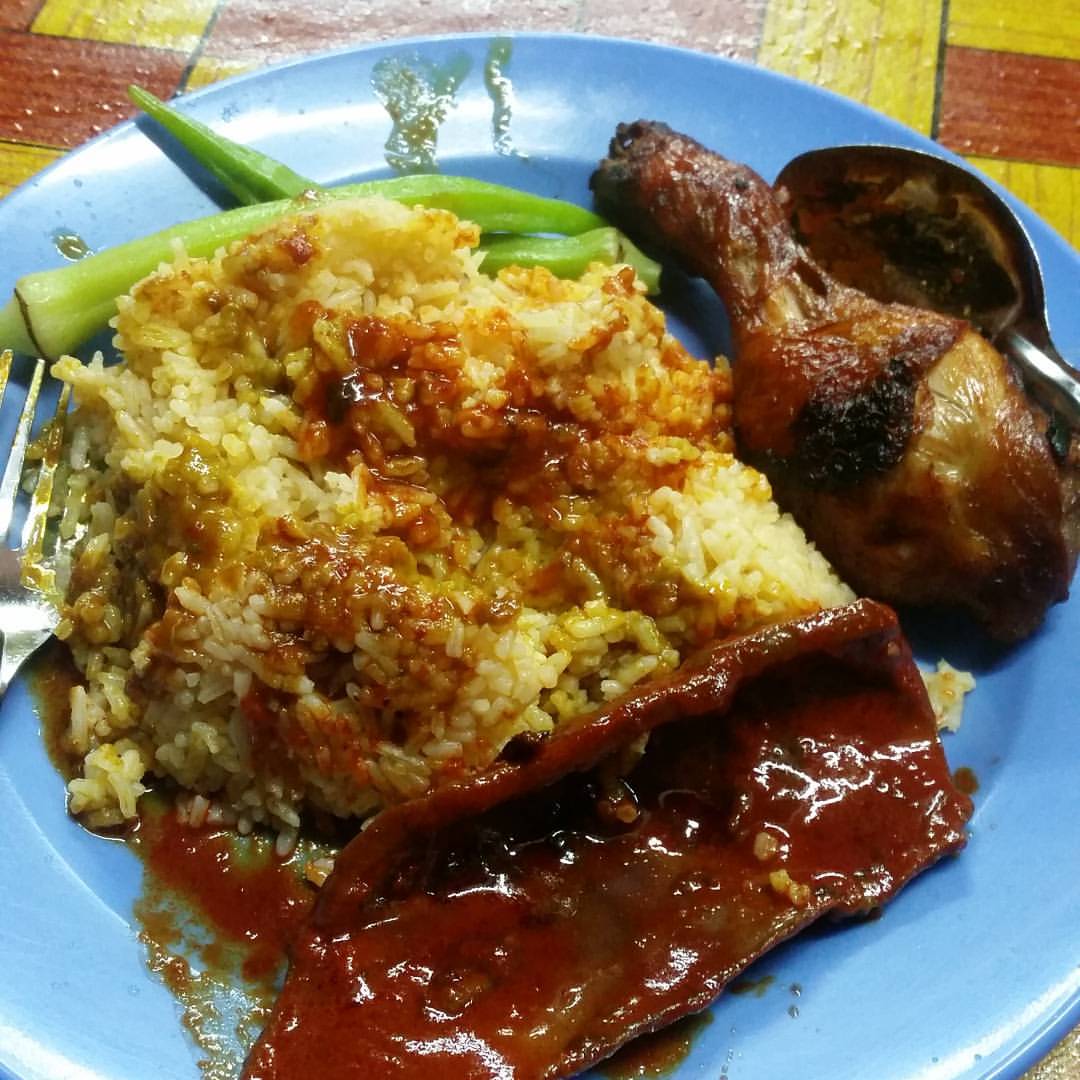
Cooked in tomato paste, ghee, milk, spices, garlic, onions and ginger, nasi tomato boasts a distinctive aroma and creamy aftertaste. It is often served with an assortment of side dishes such as ayam masak merah, gulai sotong, daging masak hitam and more. An addition that’s highly recommended is the jelatah – thinly sliced cucumbers, pineapples and onions mixed in vinegar for an extra zing!
Worth the trip: Nasi Tomato Batu Lanchang
Address: Flat Taman Seri Damai, Lintang Batu Lanchang
Operating hours: 10:30pm - 2:00am
Nasi Ulam Nyonya

While it is the daintiest rice dish on the list, there’s nothing simple about nasi ulam nyonya, a Peranakan aromatic herbed rice dish. According to Pearly Kee, the author of A Nyonya Inheritance and Pearly’s Nyonya Pantry, preparing nasi ulam nyonya takes time and patience. Fresh ingredients such as lemongrass, torch ginger (bunga kantan), kaffir lime leaves, daun kadok and others are sliced thinly and then tossed with cooked rice. Nasi ulam nyonya used to be a specialty to the Nyonya community during celebratory events such as birthdays or weddings but today, it is on the menu in many Nyonya restaurants in town.
Where to try: Moh Teng Pheow
Address: Lebuh Chulia (Jalan Masjid), 10200, George Town
Operating hours: 10:30am - 5:00pm (closed on Mondays)
Nasi Melayu

Set down your fork and spoon – nasi melayu is best eaten with hands. There is no specific rule to what makes nasi Melayu what it is – essentially it is white rice with an extensive spread of Malay dishes. Those who prefer a little heat may add gulai ayam, curry fish head and beef rendang to the mix. Ulam or fresh vegetables served raw or blanched are the trademark of nasi melayu; there’s usually a vast selection of freshly picked local herbs such as ulam raja, daun cekur, daun selom, pucuk gajus, petai, pegaga and daun kaduk to be eaten with a dollop of freshly made sambal belacan. Grilled fish is often paired with air asam, a condiment made of bird’s eye chilli, onions, diced tomatoes, kerisik, belacan and tamarind juice.
Where to try: Nasi Melayu Lidiana
Address: Medan Selera Tanjung Bunga
Operating hours: 7:00am - 9:00pm (closed on Sundays)
Worth the trip: Minah Restaurant
Address: Jalan Sultan Azlan Shah, Taman Tun Sardon, Gelugor
Operating hours: 10:00am - 5:00pm (closed on Mondays)
Nasi Lemuni

Ask any out-of-towner if they have heard of nasi lemuni and chances are the answer is "no". This uniquely northern rice dish is not only delicious, it is also very healthy. According to Chef Nurilkarim Razha from Jawi House Cafe Gallery, nasi lemuni is traditionally eaten as a confinement dish for new mothers in the northern Malay community. It is believed that daun lemuni enhances blood flow, balances hormones and improves one’s digestion. This rice dish is cooked with daun lemuni (Vitex trifolia) and is often accompanied by sambal, fried anchovies, toasted peanuts, hard-boiled eggs and cucumber. Today, one can find nasi lemuni in many Ramadhan bazaars during the fasting month.
Where to try: Jawi House Cafe Gallery
Address: 85, Armenian Street
Operating hours: 11:00am to 10:00pm (closed on Tuesdays)
Worth the trip: Nasi Lemuni
Address: Kompleks Majlis Bandaraya Pulau Pinang Lebuh Nipah (opposite Kayu Nasi Kandar)
Operating hours: 8:00am to 1:00pm (closed on Mondays and Tuesdays)
~Courtesy of myPenang~
Monday, 12 November 2018
Laksa
Laksa is a spicy noodle soup popular in Peranakan cuisine. Laksa consists of rice noodles or rice vermicelli with chicken, prawn or fish, served in spicy soup based on either rich and spicy curry coconut milk or on sour asam (tamarind or gelugur). Laksa is found in Malaysia, Singapore, Indonesia, and Southern Thailand.
The type of laksa is based upon the soup base employed in its recipe; either rich and savoury coconut milk, fresh and sour asam (tamarind, gelugur or kokum), or the combination of the two.
There are three basic types of laksa: curry laksa, asam laksa, and other variant that can be identified as either curry or asam laksa.
Curry laksa is a coconut milk curry soup with noodles, while asam laksa is a sour, most often tamarind-based, soup with noodles. Thick rice noodles also known as laksa noodles are most commonly used, although thin rice vermicelli (bee hoon or mee hoon) are also common, and some recipes might create their own rice noodle from scratch. Some variants might use other types of noodles; Johor laksa for example uses spaghetti, while a fusion recipe might use Japanese udon noodle.

Laksa lemak, also known as nyonya laksa (Malay: Laksa nyonya), is a type of laksa with a rich coconut gravy. Lemak is a culinary description in the Malay language which specifically refers to the presence of coconut milk which adds a distinctive richness to a dish. As the name implies, it is made with a rich, slightly sweet and strongly spiced coconut gravy. Laksa lemak is usually made with a fish-based gravy (with vegetarian food stalls omitting fish) and quite similar to Thai laksa (Malay: Laksa Thai), perhaps to the point that one could say they are one and the same.

Asam laksa is a sour, fish and tamarind-based soup. Penang Asam Laksa listed at number 26th on World's 50 most delicious foods compiled by CNN Go in 2011. Asam is the Malay word for any ingredients that makes a dish tastes sour (e.g. tamarind, gelugur or kokum). Laksa typically uses asam keping, known as kokum in the English speaking world, which is a type of dried slices of sour mangosteens.
The modern Malay spelling is asam, though the spelling assam is still frequently used.
The main ingredients for asam laksa include shredded fish, normally kembung (small mackerel of the Rastrelliger genus), and finely sliced vegetables including cucumber, onions, red chillies, pineapple, lettuce, common mint, daun kesum (Vietnamese mint or laksa mint), and pink bunga kantan (torch ginger). Asam laksa is normally served with either thick rice noodles or thin rice noodles (vermicelli). And topped off with petis udang or "hae ko" (蝦膏), a thick sweet prawn/shrimp paste.


Source: Wikipedia and Facebook
The type of laksa is based upon the soup base employed in its recipe; either rich and savoury coconut milk, fresh and sour asam (tamarind, gelugur or kokum), or the combination of the two.
There are three basic types of laksa: curry laksa, asam laksa, and other variant that can be identified as either curry or asam laksa.
Curry laksa is a coconut milk curry soup with noodles, while asam laksa is a sour, most often tamarind-based, soup with noodles. Thick rice noodles also known as laksa noodles are most commonly used, although thin rice vermicelli (bee hoon or mee hoon) are also common, and some recipes might create their own rice noodle from scratch. Some variants might use other types of noodles; Johor laksa for example uses spaghetti, while a fusion recipe might use Japanese udon noodle.

Laksa lemak, also known as nyonya laksa (Malay: Laksa nyonya), is a type of laksa with a rich coconut gravy. Lemak is a culinary description in the Malay language which specifically refers to the presence of coconut milk which adds a distinctive richness to a dish. As the name implies, it is made with a rich, slightly sweet and strongly spiced coconut gravy. Laksa lemak is usually made with a fish-based gravy (with vegetarian food stalls omitting fish) and quite similar to Thai laksa (Malay: Laksa Thai), perhaps to the point that one could say they are one and the same.

Asam laksa is a sour, fish and tamarind-based soup. Penang Asam Laksa listed at number 26th on World's 50 most delicious foods compiled by CNN Go in 2011. Asam is the Malay word for any ingredients that makes a dish tastes sour (e.g. tamarind, gelugur or kokum). Laksa typically uses asam keping, known as kokum in the English speaking world, which is a type of dried slices of sour mangosteens.
The modern Malay spelling is asam, though the spelling assam is still frequently used.
The main ingredients for asam laksa include shredded fish, normally kembung (small mackerel of the Rastrelliger genus), and finely sliced vegetables including cucumber, onions, red chillies, pineapple, lettuce, common mint, daun kesum (Vietnamese mint or laksa mint), and pink bunga kantan (torch ginger). Asam laksa is normally served with either thick rice noodles or thin rice noodles (vermicelli). And topped off with petis udang or "hae ko" (蝦膏), a thick sweet prawn/shrimp paste.


Source: Wikipedia and Facebook
Thursday, 1 November 2018

Monday, 29 October 2018
Roti john
Roti john is an omelette sandwich founded by a Malay who lived in Singapore during the British colonial times before being widely popular throughout the Malay Peninsula in present-day Malaysia.

Roti is the Hindi, Urdu and Malay word for bread, and more generally for any bread-based or bread-like food, including sandwiches and pancakes. The origin of john in the name is allegedly due to the Western origin of the baguette and British colonial rule in British Malaya and Singapore island.
The ingredients include minced meat (chicken or mutton), onion, egg, tomato-chilli sauce and a baguette-type loaf.
~Wikipedia~

Roti is the Hindi, Urdu and Malay word for bread, and more generally for any bread-based or bread-like food, including sandwiches and pancakes. The origin of john in the name is allegedly due to the Western origin of the baguette and British colonial rule in British Malaya and Singapore island.
The ingredients include minced meat (chicken or mutton), onion, egg, tomato-chilli sauce and a baguette-type loaf.
~Wikipedia~
Tuesday, 18 September 2018
Asam Pedas
Asam Pedas
Asam Pedas (Indonesian and Malaysian Malay: Asam Pedas, Minangkabau: Asam Padeh, English: Sour and Spicy) is a Minangkabau and Malay sour and spicy fish stew dish. It is popular in Indonesia and Malaysia.

The spicy and sour fish dish is known widely in Sumatra and Malay Peninsula. It is part of the culinary heritage of both Minangkabau and Malay traditions, thus its exact origin is unclear. The Minang asam padeh can be easily found throughout Padang restaurants in Indonesia and Malaysia.
It has become a typical cuisine of Malays from Jambi, Riau, Riau Islands, Malacca, and as far north in Aceh. The spice mixture and the fish used might be slightly different according to the area.
~wikipedia~
Asam Pedas (Indonesian and Malaysian Malay: Asam Pedas, Minangkabau: Asam Padeh, English: Sour and Spicy) is a Minangkabau and Malay sour and spicy fish stew dish. It is popular in Indonesia and Malaysia.

The spicy and sour fish dish is known widely in Sumatra and Malay Peninsula. It is part of the culinary heritage of both Minangkabau and Malay traditions, thus its exact origin is unclear. The Minang asam padeh can be easily found throughout Padang restaurants in Indonesia and Malaysia.
It has become a typical cuisine of Malays from Jambi, Riau, Riau Islands, Malacca, and as far north in Aceh. The spice mixture and the fish used might be slightly different according to the area.
~wikipedia~
Monday, 3 September 2018
Penang folk grumble about SST's effect on nasi kandar
Penang folk grumble about SST's effect on nasi kandar
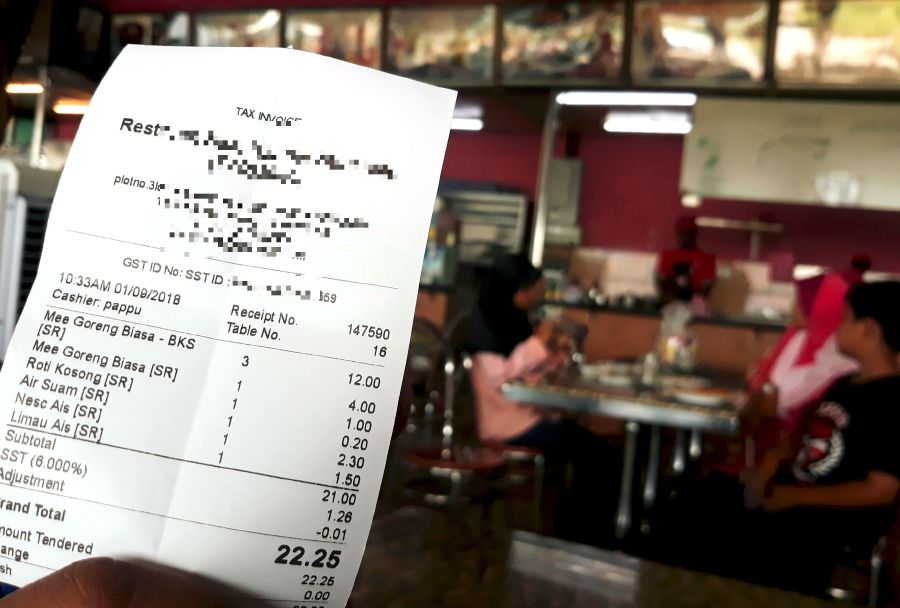
Nasi kandar outlets, motorcycle accessories, engine lubricants and mobile phone reload cards - these were among the items which have experienced an increase in prices following the implementation of the Sales and Services Tax (SST), which came into effect today.
NSTP’s checks at a nasi kandar outlet here showed that the shop’s management has implemented a six per cent tax on its menu items.
One customer, when met, said he did not expect his plate of mee goreng to have a six per cent sales tax.
“It’s the school holidays so my family and I decided to come here to get a bite. The price was different back when the Goods and Services Tax (GST) was in effect.
“But now, the price appears to have gone up.
“I only found out upon paying. When I looked at the receipt, it stated that there was a six per cent tax.
“I was under the impression that the tax was only imposed on manufacturers and not traders. I didn’t think that the menu items would also see an increase,” he said.
Meanwhile, Mohd Alif Haikal Khairil Rosdi, 16, said he was subjected to a 10 per cent tax when he bought accessories for his motorcycle.
The student, met at a motorcycle workshop here, said he wanted to buy a basket and kickstand for his motorcycle and didn’t expect that the items would cost more.
“I’m still studying and I saved money based on the previous retail price. And now, I found that the items were more expensive than before.
“I didn’t have enough money so I had to ask my mum to top up,” said Mohd Alif, who works part-time at a restaurant.
Prepaid mobile phone users also grumbled about the tax imposed each time they buy prepaid credit.
They said the SST has led to a difference in what they are paying.
“I know the government had announced that the SST would kick in today. But the effect is unexpected.
“Those who use prepaid services are mostly teens and usually come from the lower-income group. It definitely has an impact on us when we reload, even if it’s just six per cent,” said one buyer.
Checks at the Mydin supermarket here, meanwhile, showed that quite a number of items were not subjected to the SST.
Packet drinks, for example, saw no price increases.
~News courtesy of New Straits Times~
Nasi kandar outlets, motorcycle accessories, engine lubricants and mobile phone reload cards - these were among the items which have experienced an increase in prices following the implementation of the Sales and Services Tax (SST), which came into effect today.
NSTP’s checks at a nasi kandar outlet here showed that the shop’s management has implemented a six per cent tax on its menu items.
One customer, when met, said he did not expect his plate of mee goreng to have a six per cent sales tax.
“It’s the school holidays so my family and I decided to come here to get a bite. The price was different back when the Goods and Services Tax (GST) was in effect.
“But now, the price appears to have gone up.
“I only found out upon paying. When I looked at the receipt, it stated that there was a six per cent tax.
“I was under the impression that the tax was only imposed on manufacturers and not traders. I didn’t think that the menu items would also see an increase,” he said.
Meanwhile, Mohd Alif Haikal Khairil Rosdi, 16, said he was subjected to a 10 per cent tax when he bought accessories for his motorcycle.
The student, met at a motorcycle workshop here, said he wanted to buy a basket and kickstand for his motorcycle and didn’t expect that the items would cost more.
“I’m still studying and I saved money based on the previous retail price. And now, I found that the items were more expensive than before.
“I didn’t have enough money so I had to ask my mum to top up,” said Mohd Alif, who works part-time at a restaurant.
Prepaid mobile phone users also grumbled about the tax imposed each time they buy prepaid credit.
They said the SST has led to a difference in what they are paying.
“I know the government had announced that the SST would kick in today. But the effect is unexpected.
“Those who use prepaid services are mostly teens and usually come from the lower-income group. It definitely has an impact on us when we reload, even if it’s just six per cent,” said one buyer.
Checks at the Mydin supermarket here, meanwhile, showed that quite a number of items were not subjected to the SST.
Packet drinks, for example, saw no price increases.
~News courtesy of New Straits Times~
Monday, 27 August 2018
Teh Tarik

Enjoy a good start of the day with a cuppa of our national drink, Teh Tarik which literally means 'pulled tea'. It is a hot Indian milk tea beverage.
Its name is derived from the pouring process of "pulling" the drink during preparation. It is made from black tea, condensed milk and evaporated milk.
In Malaysia, there are occasions where teh tarik brewers gather for competitions and performances to show their ability to drag a long stream of tea. ✌
~Tourism Malaysia FB~
Subscribe to:
Posts (Atom)